
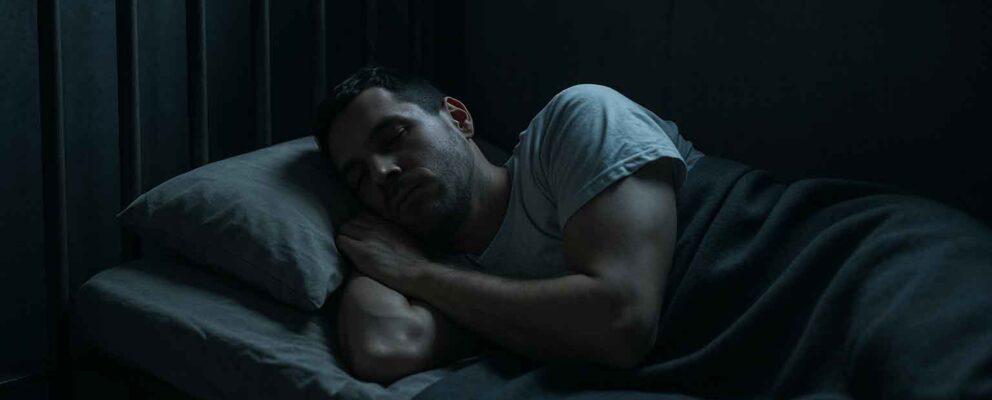
Across U.S. correctional facilities, chronic sleep deprivation is a hidden public health emergency. It fuels violence, worsens mental illness, and drives up healthcare costs.
Decades of research link poor sleep to higher suicide risk, increased aggression, and long-term physical harm—yet prison systems rarely address it. The science is clear, the solutions are simple and affordable, and the potential impact is enormous. Treating sleep as a basic health need could save lives, improve rehabilitation, and reduce costs almost overnight.
The Crisis, in Numbers
A snapshot of the evidence driving reform—clear risks, preventable harms, and simple fixes we can deploy now.
The Economic Toll
Sleep deprivation behind bars isn’t just a humanitarian crisis—it’s a financial one. Lost productivity, increased medical costs, and higher recidivism rates place a heavy and avoidable burden on taxpayers.
After Release: Damage That Lasts
The effects of prison sleep deprivation don’t end at the gate. Long after release, the damage to physical and mental health—and the ripple effects on families and communities—can last a lifetime.
Simple, Cost-Effective Reforms
We already have the tools to solve this crisis. Some cost almost nothing to implement; others pay for themselves many times over in improved health outcomes and reduced violence.
Health & Mental Health Support
- Train chaplains to assist with mental-health needs.
- Offer Cognitive Behavioral Therapy for Insomnia (CBT-i):
- A single 60–70 min session improved sleep for 73% of participants. Ref
- More effective and cheaper than medication.
- Expand telemental health services.
- Provide sleep education at intake and health assessment.
Fix the Sleep Environment
- Noise: Audit and reduce door slams; train staff; provide earplugs.
- Light: Limit unnecessary nighttime lighting; provide sleep masks; encourage staff advocacy.
- Temperature: Monitor and address extremes.
- Bedding: Use higher-density mattresses (≥1.8 lbs/cu ft); replace regularly; allow extra padding for vulnerable inmates.
Scheduling & Operations
- Align medication calls and meals with healthy sleep cycles.
- Set minimum sleep-hour standards.
- Avoid unnecessary overnight disruptions.
- Establish clear reporting for sleep violations.
Training & Accountability
- Train officers to recognize signs of sleep deprivation.
- Conduct regular sleep-hygiene audits.
- Provide confidential ways for inmates to report sleep problems.
Technology
- Use wearable devices or sleep-tracking apps to monitor patterns, noise, and light exposure.
Please see also our report about Juvenile Detention Facilities.
References:
- American Journal of Managed Care. (2023, October 9). Sleep inequities persist in various prisons, hospitals, and universities. AJMC. https://www.ajmc.com/view/sleep-inequities-persist-in-various-prisons-hospitals-universities
- Sarzetto, A., Bosia, M., Pasqualoni, E., & Travaini, G. (2021). Eyes wide open: A systematic review of the association between insomnia and aggression in forensic contexts. International Journal of Law and Psychiatry. Advance online publication.https://www.sciencedirect.com/science/article/abs/pii/S0160252721000637
- Chung, K. F., Kan, K. K. K., Yeung, W. F., & Mok, H. K. (2018). Managing acute insomnia in prison: Evaluation of a one-shot cognitive behavioral therapy for insomnia (CBT-I) intervention. International Journal of Offender Therapy and Comparative Criminology, 63(10), 1841–1856. https://pubmed.ncbi.nlm.nih.gov/30289290/
- Harvard Medical School. (2011, September 1). Insomnia costing U.S. workforce $63.2 billion a year, researchers estimate. Harvard Medical School. https://hms.harvard.edu/news/insomnia-costing-us-workforce-632-billion-year-researchers-estimate#:~:text=Insomnia%20is%20costing%20the%20average,252.7%20days%20and%20%2463.2%20billion
- Institute of Medicine (US) Committee on Sleep Medicine and Research, Colten, H. R., & Altevogt, B. M. (Eds.). (2006). Sleep Disorders and Sleep Deprivation: An Unmet Public Health Problem. National Academies Press (US). https://www.ncbi.nlm.nih.gov/books/NBK19961/
- New York City Independent Budget Office. (2020, September). Why has the cost of correctional health services increased in the last decade? https://ibo.nyc.ny.us/iboreports/why-has-the-cost-of-correctional-health-services-increased-in-the-last-decade-btn-september-2020.pdf
- Ramos, A. R., Dong, C., Rundek, T., & Wright, C. B. (2023). Short sleep duration and insomnia linked to doubled risk of cognitive impairment. NeurologyLive. https://www.neurologylive.com/view/short-sleep-duration-insomnia-linked-to-doubled-risk-of-cognitive-impairment
- Morris, N. P., Holliday, J. R., & Binder, R. L. (2021). Litigation over sleep deprivation in U.S. jails and prisons. Psychiatric Services, 72(10), 1237–1239. https://psychiatryonline.org/doi/full/10.1176/appi.ps.202100438
- Karlin, B. E., Anderson, R. J., Rung, J. M., Drury-Gworek, C., & Barrett, T. S. (2024). Clinical and financial significance of insomnia within a large payor-provider health system. Sleep Advances, 5(1), zpae054. https://academic.oup.com/sleepadvances/article/5/1/zpae054/7721768
- Lv, Y.-N., Cui, Y., Zhang, B., & Huang, S.-M. (2022). Sleep deficiency promotes Alzheimer’s disease development and progression. Frontiers in Neurology, 13, Article1053942.https://pmc.ncbi.nlm.nih.gov/articles/PMC9795181/#:~:text=Sleep%20deficiency%20can%20cause%20various
- Elumn, J. E., Li, P., Lytell, M., Garcia, M., Wang, E., & Yaggi, H. (2023). “What if that’s your last sleep?” A qualitative exploration of the trauma of incarceration and sleep. SLEEP Advances, 5, zpad055. https://pmc.ncbi.nlm.nih.gov/articles/PMC10838125/
- Tussey, E. J., Perez, G. R., & Lynch, S. M. (2024). Sleepless behind bars: The connection between mental health, environment, and sleep among women in jail. SLEEP Advances, 5(1), zpae012. https://academic.oup.com/sleepadvances/article/5/1/zpae012/7607864
- D’Aurizio, G., Tosti, B., Tempesta, D., Avvantaggiato, L., Splendiani, A., Sacco, S., Mandolesi, L., & Curcio, G. (2023). Reduced Sleep Amount and Increased Sleep Latency in Prisoners: A Pilot Study in an Italian Jail. Brain Sciences, 13(1), 132. https://pmc.ncbi.nlm.nih.gov/articles/PMC9856642/
Expert Voices
Pamela San Miguel
Psychiatric Mental Health Nurse Practitioner, St. Paul, Minnesota, USA
A lack of restorative sleep can exacerbate preexisting conditions by impairing emotional regulation and diminishing a patient’s ability to engage in therapeutic communication and interventions.
Providing sleep education early at intake and again at the initial health assessment may offer the best opportunity for improvement.
Deanna Dwenger
Chief Behavioral Health Advisor, Elevatus Architecture; Former Executive Director of Behavioral Health, Indiana Department of Correction
Many incarcerated individuals request sleep aids from medical or psychiatric providers both for convenience, but also because of genuine, chronic sleep disruption. However, even in likely genuine cases, responses are often limited to a cursory referral to mental health or generic advice from medical staff. Comprehensive, preventive, or restorative approaches to sleep simply aren’t embedded in the system. This absence speaks volumes about how little value we place on rest as a component of overall health and rehabilitation for these individuals.
The prevailing attitude tends to be: “They have plenty of time to sleep”—without any consideration for sleep quality or environmental barriers like noise, lighting, or safety concerns.
For individuals with bipolar disorder—a population that’s overrepresented in correctional settings—disrupted sleep is especially dangerous, as it can directly trigger manic episodes. This then impacts judgment, decision-making, and risk-taking behaviors, all of which have real implications for safety inside the facility.
We could feasibly collect data on sleep complaints, evaluate environmental factors (noise, light, temperature), and offer evidence-based nonpharmacological interventions. I proposed the idea of secure Murphy beds, just to allow for a physical distinction between “rest space” and “living space.” I am still looking for a company who wants to explore this with me.
If we want incarcerated people to participate meaningfully in rehabilitative programs, to regulate their emotions, to reduce aggression and conflict, and to return to their communities healthier than when they came in—we must treat sleep as a critical pillar of care, not an afterthought.
Kirstin Travieso
– Staff Psychologist Federal Bureau of Prisons – South Carolina
Sleep Health is hardly ever discussed for both inmates and Staff. I would say a majority of the clinical contacts I have with my population are specifically to discuss poor sleep hygiene. A lot of the inmates want to discuss this both via psychoeducation and psychotropic medication regimens.
Tania Stubbs
Behavioral Therapist & Correctional Officer Case Manager, Mississippi Department of Corrections, USA
Poor sleep health can have significant consequences for both physical and mental health. It can exacerbate anxiety, depression, and mood. It can also lead to increased aggression and behavioral issues, making it challenging to maintain a safe and rehabilitative environment.
Take Action With Us
The Health Culture Foundation is forming working groups on multiple sub-topics of sleep health in correctional facilities—from environmental reforms to mental health support and policy advocacy.
If you work in corrections, healthcare, architecture, policy, or research—or if you have lived experience—we want to collaborate.
Contact us to join a working group, share expertise, or help advance this critical reform.
Our Prison Wellbeing Leaders

Mariam Assem
Research FellowMariam Assem is a clinical pharmacist and clinical research professional with a passion for advancing evidence-based medicine and expanding access to high-quality research across populations. With a strong foundation in diabetes, cardiology, nephrology, and neonatology, she transitioned into clinical research to drive innovation at the intersection of science, patient care, and strategy.
Read More
Kalman Gacs
Managing DirectorKalman Gacs is Managing Director of the Health Culture Foundation, where he leads national initiatives like Sleep Awareness Month and SleepLiteracy.org. A seasoned strategist, he previously ran a web agency serving nonprofits, co-founded a marketing firm serving top colleges, and worked in market research with Fortune 500 companies.
Read MoreAcknowledgements:
We would like to extend our deepest gratitude to all who contributed to this work.
David Bishop, MSW, LCSW
– CEO, Sleep Equity Project; Sleep Disorders Research Advisory Board, The National Institutes of Health:
Thank you for your invaluable guidance and support. Your leadership and expertise have been instrumental in shaping our understanding of sleep equity and its impact on health and justice.
Scott Peyton, CNP
– Director, Government Affairs, Prison Fellowship:
We are grateful for your openness to potential collaboration and for your support in advancing meaningful policy discussions in this area.
To all the Behavioral Health Experts we talked to:
Thank you for your thoughtful insights and comments. Your perspectives have greatly enriched our work and ensured that it reflects the lived realities and professional expertise within behavioral health and correctional environments.
Pamela San Miguel
– Psychiatric Mental Health Nurse Practitioner, St. Paul, Minnesota, USA;
Deanna Dwenger
– Chief Behavioral Health Advisor, Elevatus Architecture; Former Executive Director of Behavioral Health, Indiana Department of Correction;
Kirstin Travieso
– Staff Psychologist, Federal Bureau of Prisons, South Carolina
Tania Stubbs
– Behavioral Therapist & Correctional Officer Case Manager, Mississippi Department of Corrections, USA
Finally, we wish to thank the Justice Policy Advocates in California for encouraging us to publish this report and for inspiring us to advance this work with purpose and urgency.
Together, your contributions have been vital in helping us build a more informed, compassionate, and impactful approach to addressing sleep deprivation in correctional settings.